
- Details
-
Also available:


Lord,
Hear our prayer in this year 2020, and on this day for decent work!
You see us at the exit of this global health crisis provoked by COVID-19!
During this crisis and in the immediate aftermath,
We have commended, applauded and recognised the work of health workers,
And also, all those other key workers that made an indispensable contribution to social care, and to the economy ensuring us “living together”.
We wanted their work to be recognised and better remunerated, appreciated and decent!
But before this crisis, Lord
You knew well that this work was not being recognised,
And as well that, nurses, fire fighters, police officers, transport workers, refuge collectors, etc…. who had been demanding better salaries, working conditions and superior equipment, were rejected, refused, ignored in the name of economic system!
You know, all too well, that numerous workers have deteriorating health and sometimes are losing their lives
Because their working conditions were too poor or dangerous.
So, Lord, make this global crisis produce something new!
That we find new ways of living our personal lives, engaging in new ways of consuming, planning, taking care of the planet and by respecting the work of others more decently.
That we find new ways of living our social lives, be that in our groups, our associations, our co-operatives, … learning how to invent new forms of work that is more respectful of health and with a decent salary.
That we find new ways of living our life, so that political, economic, and trades union leaders … place human beings as the priority above the economy at thus exerting more responsibility and a little more decency.
That we find new ways of living in our international relations, and that change the systems of injustice which imprison millions of women and men in materiel poverty, health insecurity, economic exclusion, … so many evils that prevent having a real and decent life.
That we find new ways of living our spiritual life, so that through these trials, we will understand better how much You matter to each and everyone of us. Yes, Lord God, help-us:
To be men and women of Faith, to always desire to believe in a decent world.
To be men and women of Hope, capable of imaging this decent life.
To be men and women of Love, making the choices, leading to actions that will bring a world that we are constructing to be one that is more beautiful, more just, and will be a reflection of Your Love.
A reflection of You: A Good, patient and merciful God, a Decent God for us all and for ever and ever Amen
Fr, Bernard ROBERT – international Chaplain WMCW
- Details
-
Also available:
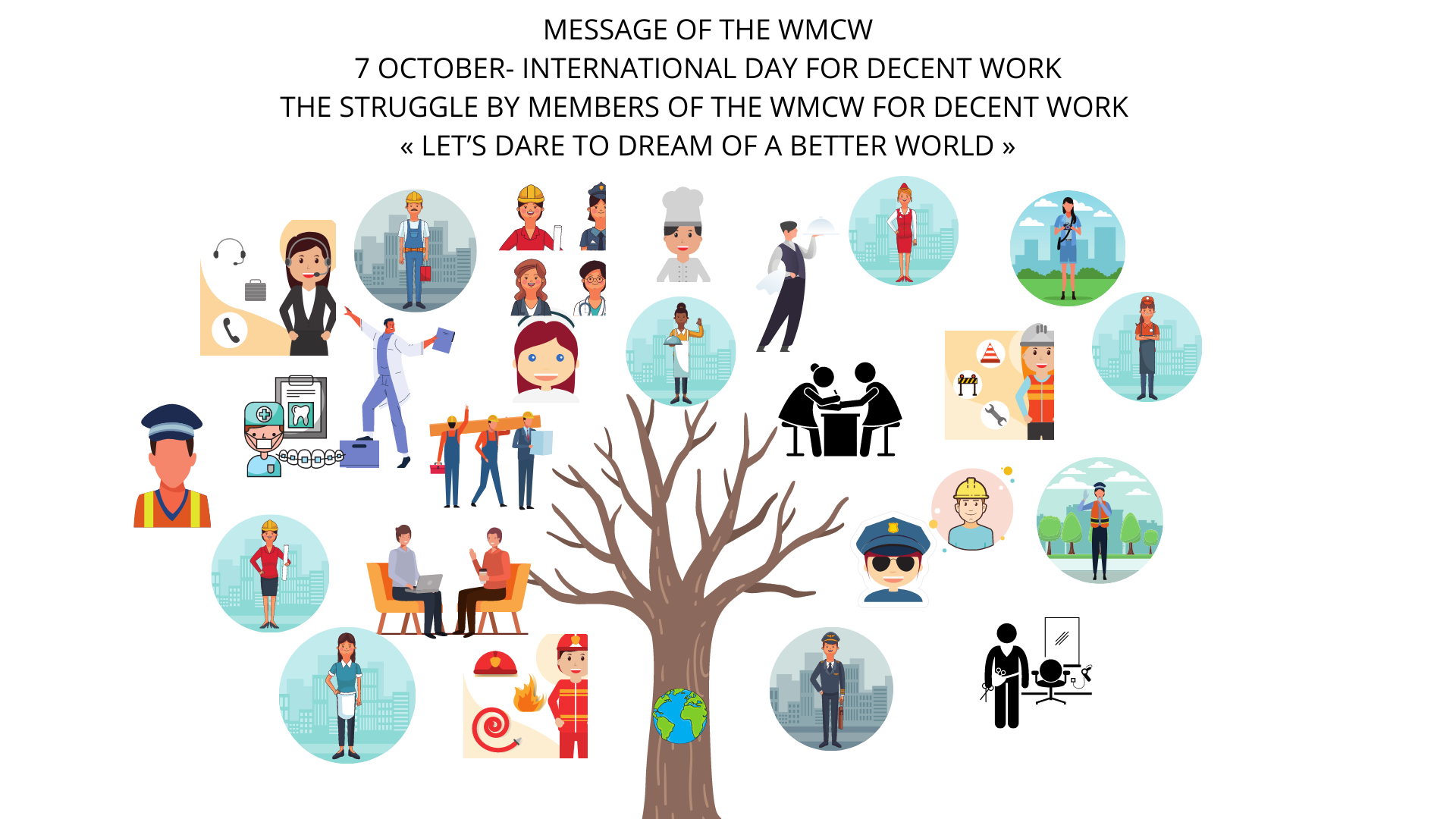
Decent work is central to the four strategic objectives of the International Labour Organisation relating to rights at work, in particular those defined as fundamental by the Declaration of Fundamental Principles Rights and at Work and its Follow-up, adopted in 1998.
For the ILO, it is necessary to put in place economic policies to stimulate the creation of more and better jobs, to reduce informal work, to fight against child labour and slavery as well as against all forms of discrimination. It is also imperative to promote youth employment, extend and improve social protection, stimulate education and vocational training and strengthen workers' rights.
This implies that women and men all over the world benefit from decently paid employment carried out under conditions of equality, freedom, including freedom of association and total security in order to guarantee a dignified life.
Decent and productive work is the main tool in overcoming poverty that afflicts millions of working people around the world. It is fundamental for building more democratic societies and for combating all forms of exclusion.
On this international day of Decent Work October 7, it is time to strengthen our reflection on the right to decent work for all.
- Details
-
Also available:
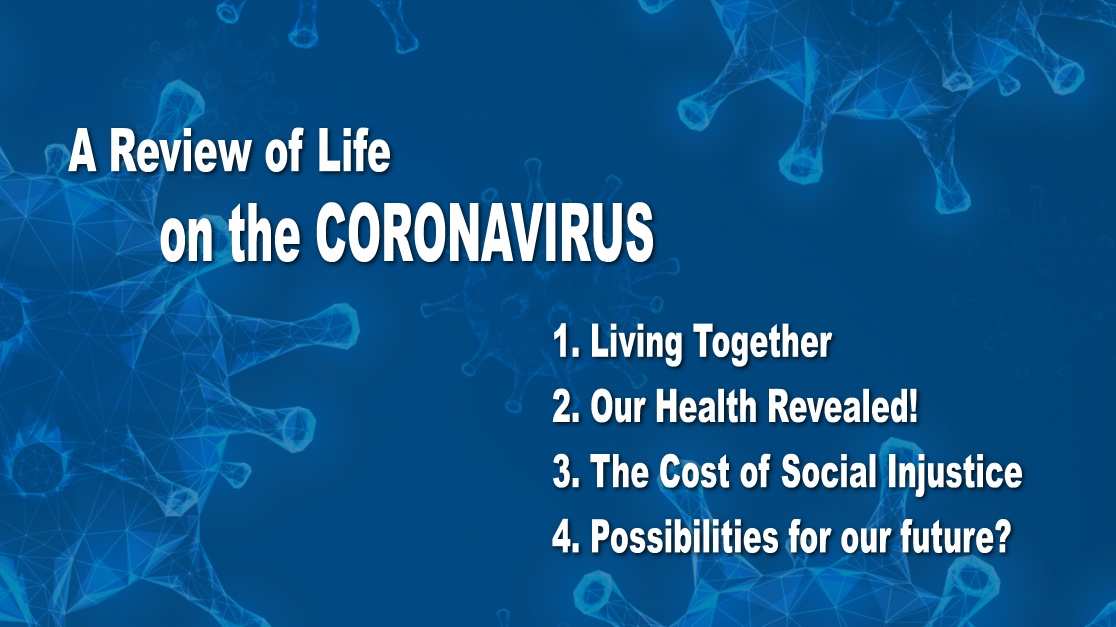
The WMCW offers you a four-part Review of Life about the situations experienced during this period of coronavirus pandemic. Propose it to your activists and send your thoughts to the This email address is being protected from spambots. You need JavaScript enabled to view it.. Good reflection !
- Details
-
Also available:
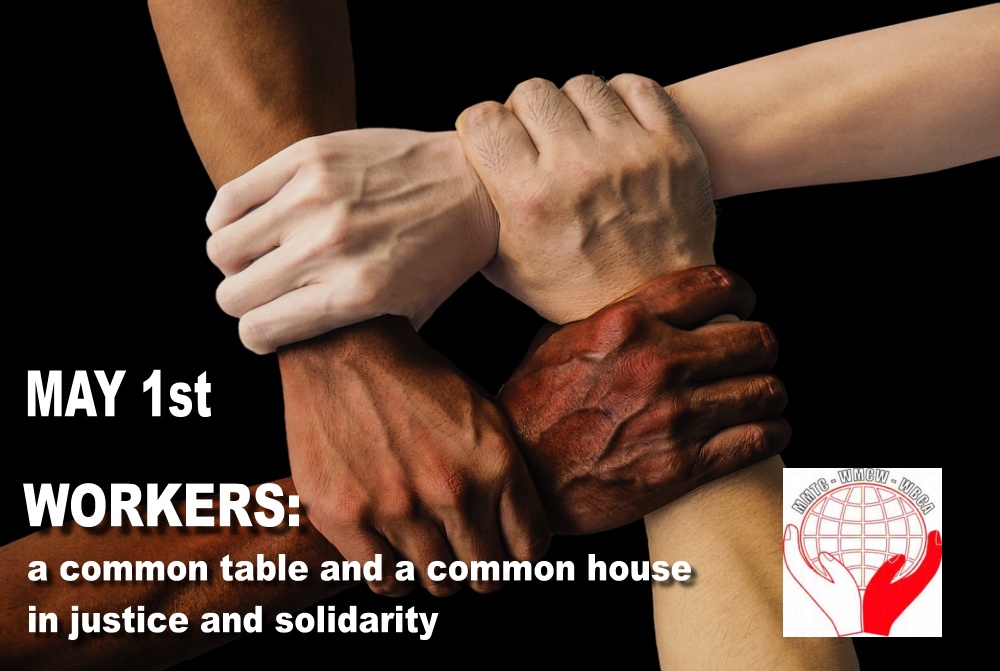
On 1st May, International Workers’ Day, as a World Movement of Christian Workers, we commemorate:
The liberating feat of the martyred workers of Chicago, USA, 1884. Those who with their days of protest, stoppages and boycotts, from May 1 to 4, 1884, claimed an 8-hour day of work: "eight hours for labour eight hours for recreation and eight hours for rest ”- American Federation of Labour.
Our commitment as a Christian workers' movement, articulated to the struggles of all the workers in the countryside and the city; in achieving a Decent Life expressed in: decent work days, fair wages and humane conditions in the work environment.
- Details
-
Also available:
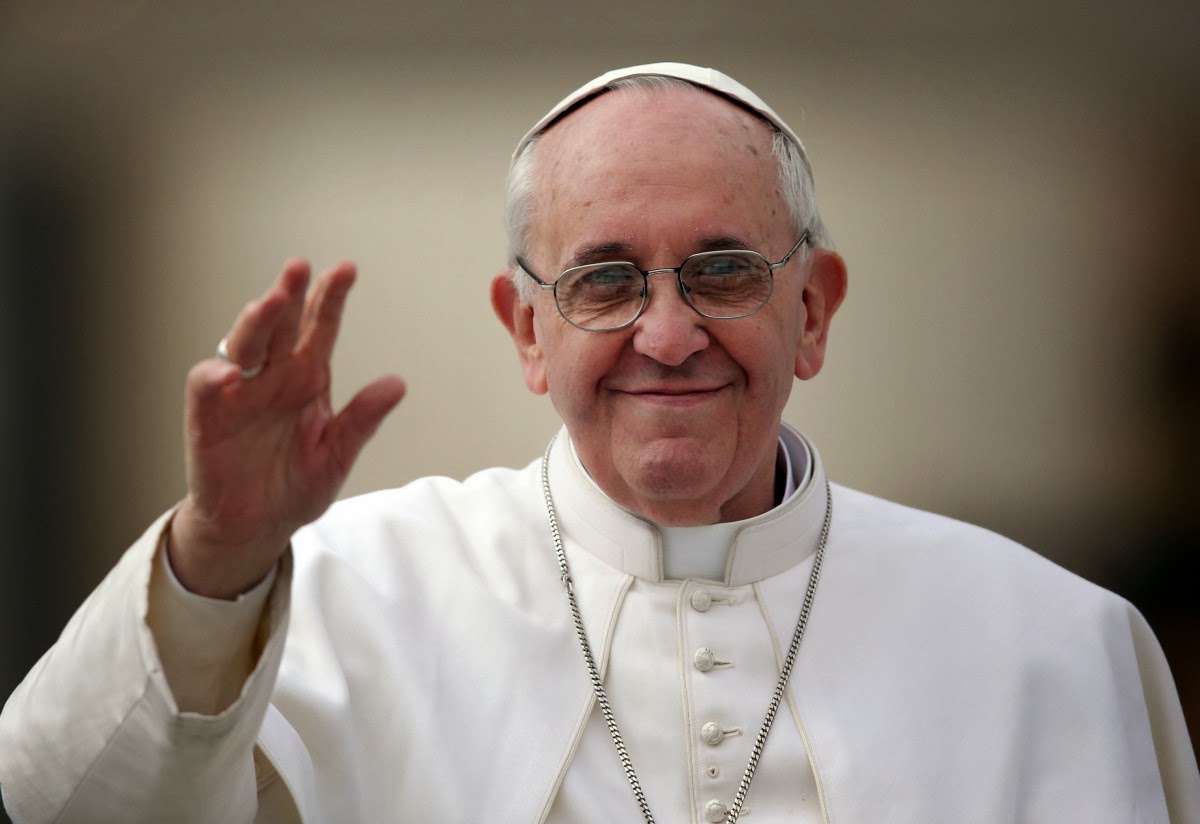
To our brothers and sisters of popular movements and organizations
Dear Friends,
I often recall our previous meetings: two at the Vatican and one in Santa Cruz de la Sierra, and I must tell you that this “souvenir” warms my heart. It brings me closer to you, and helps me re-live so many dialogues we had during those times. I think of all the beautiful projects that emerged from those conversations and took shape and have become reality. Now, in the midst of this pandemic, I think of you in a special way and wish to express my closeness to you. In these days of great anxiety and hardship, many have used war-like metaphors to refer to the pandemic we are experiencing. If the struggle against COVID-19 is a war, then you are truly an invisible army, fighting in the most dangerous trenches; an army whose only weapons are solidarity, hope, and community spirit, all revitalizing at a time when no one can save themselves alone. As I told you in our meetings, to me you are social poets because, from the forgotten peripheries where you live, you create admirable solutions for the most pressing problems afflicting the marginalized.
I know that you nearly never receive the recognition that you deserve, because you are truly invisible to the system. Market solutions do not reach the peripheries, and State protection is hardly visible there. Nor do you have the resources to substitute for its functioning. You are looked upon with suspicion when through community organization you try to move beyond philanthropy or when, instead of resigning and hoping to catch some crumbs that fall from the table of economic power, you claim your rights. You often feel rage and powerlessness at the sight of persistent inequalities and when any excuse at all is sufficient for maintaining those privileges. Nevertheless, you do not resign yourselves to complaining: you roll up your sleeves and keep working for your families, your communities, and the common good. Your resilience helps me, challenges me, and teaches me a great deal.
- Details
-
Also available:
The world is upside down! The planet is in a state of panic!
And all this because of a small, elusive virus that attacks both rich and poor, that crosses borders "without showing its papers"!
And this small, odourless, colourless virus is stronger than any media campaign or international trade union: it blocks the entire world economy, makes the stock exchanges from Tokyo to New York stagger, terrorises all political and economic leaders, calls into question the functioning of the globalised neo-liberal economy, forces us to talk about "downturn"?
"Cast down the mighty from their thrones,..."
Lord God, You who hear the joys and sorrows of this world,
with WMCW movements, united in one heart and one faith, we want to tell you:
Look at the thousands of distressed people,
And give us the strength to widen our gaze!
- Details
-
Also available:
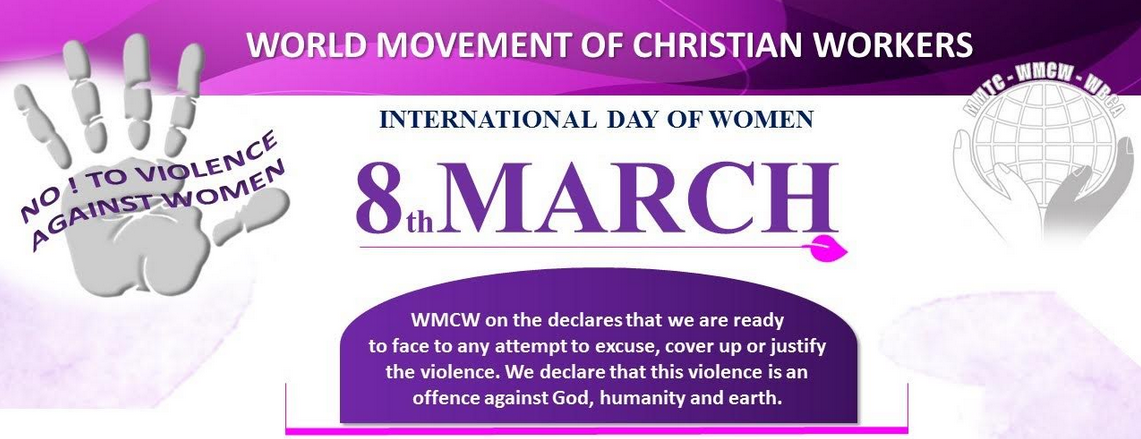
The violence against women and girls occurs all over the world. While some countries condemn it strongly, a great part of world population still considers it as “normal”. However, this violence, not only undermines women’s integrity, reduces their access to the essential services and resources.
We are grateful for many men and women who continue, courageously, to advocate for the elimination of violence against women and girls. All supporting initiative is commendable and its effects will be felt, through Christ, in all the areas of Church life.
WMCW on the occasion of 8th March (International Day of Women) declares that we are ready to face to any attempt to excuse, cover up or justify the violence. We declare that this violence is an offence against God, humanity and earth.
Our struggle is to work for eliminating violence against women and girls in its different forms (sexual, religious, psychological,…) and to promote their dignity.
We must no longer to cover our ears before the despair cries, nor stifle them keeping in silence or locking within the four walls of home by pride, fear, honour or safety...because the violence against women and girls is a sin.
- Details
-
Also available:
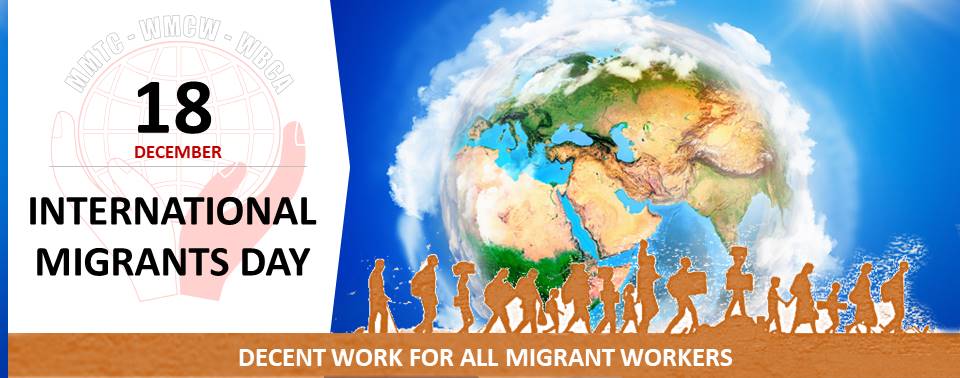
In 2000, the UN General Assembly declared 18 December as International Migrants Day. International Migrants Day recognizes the contributions of migrants and the need to protect and promote the rights of all migrants. Most Civil Society and Workers’ Organization recognize 18 December as International Day of Solidarity with all migrant workers and their families, especially the vulnerable ones.
In 2019, there are around 272 million international migrants. Millions are crossing borders seeking new opportunities for decent work and life for themselves and their families.
18 December - International Migrants Day aims to promote respect and protect, social, labour, and human rights of all migrants and members of their families. Every migrant is a human being with human rights. Migrant workers are not commodities.
- Details
-
Also available:
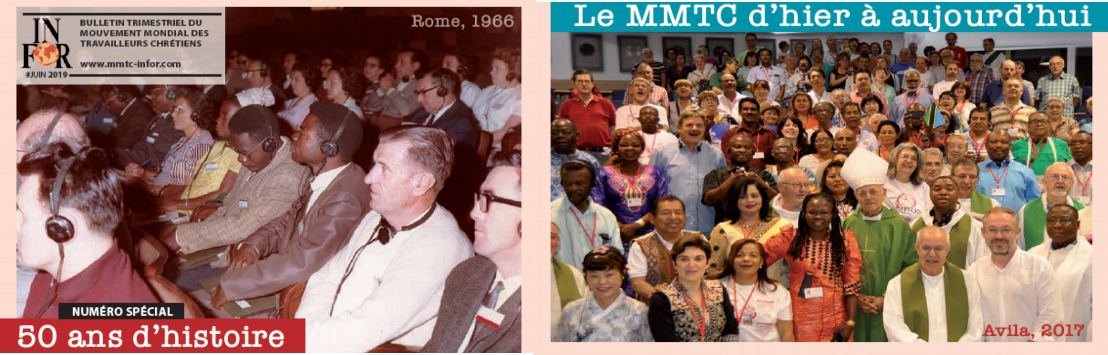
In Rome, in May 1961, on the occasion of the 70th anniversary of the encyclical “Rerum Novarum”, delegates from 42 movements decided to create a worldwide movement of Christian workers. This creation is part of a world in turmoil after the Second World War. It also comes after many exchanges and debates between the founding movements. The obstacles were many related to the history of countries and churches, languages, and movements themselves. But the WMCW birth was made possible thanks to the willingness of each movement to open up to others, to accept differences as a richness in order to open up to the universal and to make cultures dialogue in common project that goes beyond national interests. This creation of an international movement is part of the context of the Vatican Council II, which gives the Catholic Church a great breath of renewal and hope.
- Details
-
Also available:
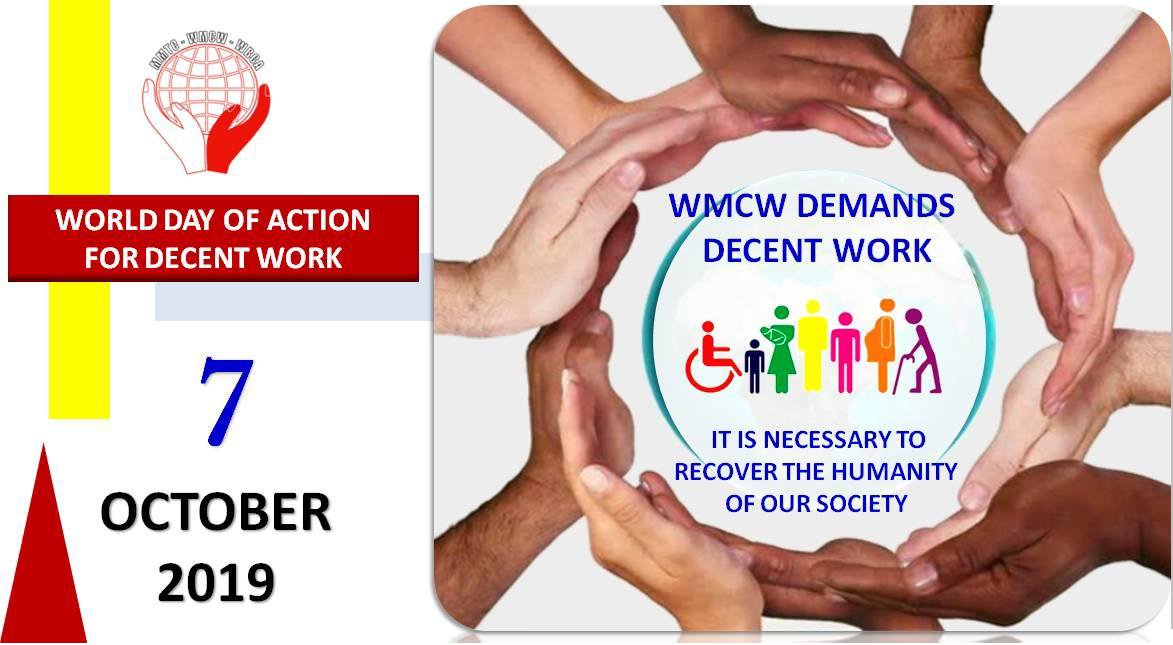
According to ILO(1), in 2018 the majority of the 3,300 million people employed in the world suffered deficits in material well-being, economic security and equal opportunities, and lacked sufficient margin for human development. In 2016, 61 per cent of the world's working population was in informal employment. By 2018, more than a quarter of workers in low- and lower-middle-income countries were living in extreme or moderate poverty. There were also 172 million unemployed people in the world (unemployment rate 5%). By 2020, 174 million people are expected to be unemployed.
For the Social Doctrine of the Church (SDC), work is a fundamental right of every person, it is a good and everyone has the right to decent work. The SDC defends the primacy of labour over capital as a fundamental principle. The rights of workers and their families are the criterion from which human work should be organised, the conditions in which it is carried out and, in reality, the whole economy.
- Details
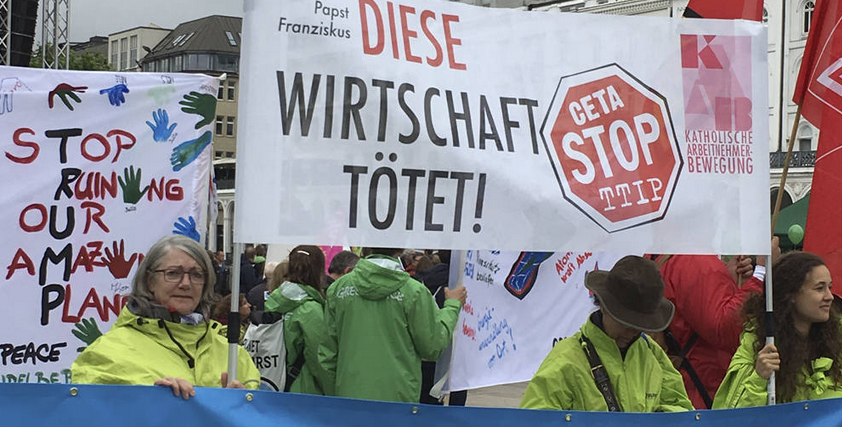
COMMITMENT WITH HUMAN DIGNITY, JOINT MANAGEMENT AND SUSTAINABILITY
Work is a essential element of human dignity. That is why the dignity of man, given by God, must be respected in the working world. In Germany, Europe and the world, millions of people have not a job to feed themselves and their families. The mechanization, automation and digitalisation must not lead millions of people to exclusion. The exploitation of resources causes irreparable damage and inhuman working conditions. The digitalisation of economy leads to precarious working conditions; around the world, the 60 per cent are employed in the informal sector, without social security, without labour rights and low wages.
We say, with the Pope Francis, “thou shalt not” to an economy of exclusion and inequality. Such an economy kills. (…). As a consequence, masses of people find themselves excluded and marginalized: without work, without possibilities, without any means of escape.(Evangelii Gaudium 53)
